Whoa! This is one of those tools that sneaks up on you. It looks simple at first glance, but it does a under the hood. My initial read made me skeptical, though actually, wait—let me rephrase that: the design choices made me curious. On one hand it’s uncluttered and fast, and on the other hand it holds advanced features that veteran DeFi users crave, which is a neat trick for a browser extension.
Really? Yes. The UX flows like a familiar app. Connection prompts are clear and permission scopes are readable. And there are subtle safeguards that reduce accidental dApp approvals, which is very very important. Long story short: it balances beginner friendliness with power-user controls, though there are trade-offs to consider.
Hmm… security is the elephant in the room. Rabby focuses on transaction safety, adding steps that help prevent signing mistakes. It breaks down gas, nonce, and call data in a way that makes sense for people who care. Initially I thought this would annoy casual users, but the extra clarity actually prevents costly errors over time, especially when interacting with complex smart contracts. That clarity matters a lot if you move real value around.
Okay, so check this out—agents of risk are still mostly human. Phishing remains the top threat. Even the slickest wallet can’t stop you from pasting a malicious contract address. Rabby adds heuristics and prompts to flag risky approvals, which reduces the cognitive load on users who might otherwise miss subtle red flags.
Here’s the thing. The extension architecture is standard for browser wallets. It hooks into the page and injects a provider. That means any page asking for wallet access can talk to it. But Rabby adds session context and a clearer UI for origin permissions, which helps you audit connections faster. My instinct said “this would be clunky,” but the implementation is surprisingly neat, and somethin’ about it feels well thought out.
Really? Yep. Multi-account handling is straightforward. You can create or import accounts and switch between them without juggling too many menus. The account import supports seed phrases and hardware keys, which is essential for custody-conscious folks. On the flip side, some advanced multisig flows still feel like they’re a step away from native support, though you can work around them through dApp integrations.
Whoa! Performance is solid. Transactions pop up quickly and signing dialogs are snappy. That’s not nothing—the best wallet is the one you actually use without cursing. Still, users on older machines might see slight slowdowns when many tabs are open, but that’s typical for extensions that keep active state.
Here’s what bugs me about the ecosystem. Too many wallets pretend security is solved. They show you a seed phrase once and act like the job is done. Rabby nudges you to take better backups and uses clearer language about risks, which I appreciate. I’ll be honest, I’m biased toward tools that teach users instead of assuming knowledge, because education reduces support tickets and losses down the line.
Features that actually matter
Shortcuts and quick settings reduce friction. You can toggle gas auto-estimation and set preferred chains in the UI. The preview for contract calls is particularly helpful because it decodes calldata into human-friendly fields, which removes some of the mystery from complex interactions and stops users from blind-approving unchecked transactions. There’s also native support for layered networks and testnets, so experimenting is safe and compartmentalized.
On one hand, the interface is minimal. On the other, power features hide in plain sight. For example, batch transaction previews and custom nonce settings give more control when managing sequences, which is useful for traders and contract deployers. Actually, wait—let me rephrase that—it’s not just useful, it’s necessary when you’re doing sophisticated flows across multiple dApps.
Security-wise, Rabby uses standard encryption for local keys and offers hardware wallet integration. That integration isn’t just a checkbox; the extension smooths the UX between your Trezor or Ledger and the browser context, though sometimes firmware quirks require patience. Also, permission granularity is a modern plus, allowing temporary approvals rather than permanent permissions, which lowers long-term exposure.
Something felt off about the permission prompts at first. They were too terse. Then an update added clearer language and context, which is a good example of iterative improvement. The project listens to user feedback. That’s rare compared to big incumbents that move slower.
How to get started (and where to download)
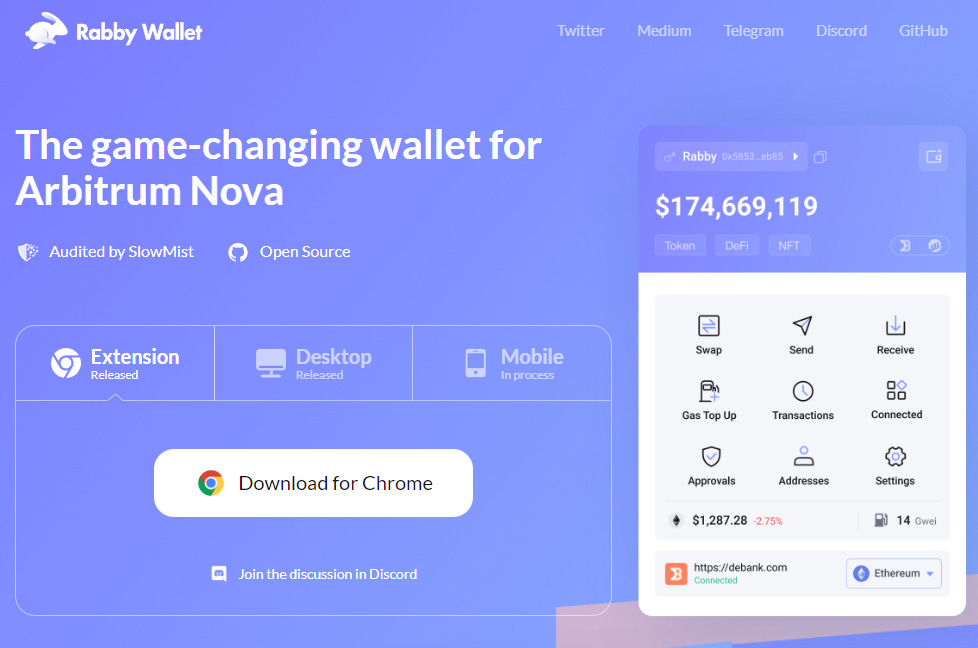
Want to try it? The recommended download page is clear and straightforward. For a safe install, use the official source and verify browser store listings. If you want a direct starting point, check out rabby wallet for the download and setup guide. Follow the seed phrase best practices: write it down, keep it offline, and never snap a photo or upload it anywhere.
Install, create or import an account, and then pin the extension for easy access. You can import hardware wallets too, but be sure to use only your hardware’s official firmware and companion apps to reduce attack surface. On the usability front, the onboarding flows explain key concepts, though a few more inline examples would help complete beginners.
Pro tip: set up a small test account first. Try a tiny transaction on a testnet or with low value. That will reveal whether you’ve understood gas settings and origin approvals without risking funds. Another tip: use different accounts for high-value holdings and everyday DeFi interactions, because compartmentalization reduces blast radius if one account is compromised.
Hmm… privacy matters. Rabby doesn’t anonymize transactions. That’s blockchain-level transparency. For privacy-minded users, combining Rabby with privacy-preserving practices (separate accounts, different browser profiles) helps, though it isn’t a catch-all. On-chain privacy is complex and often demands additional tooling.
Drawbacks and real concerns
Phishing remains king. Extensions are targets. The best defense is user vigilance. Automated heuristics are improving, but they’re not perfect. Sometimes social engineering tricks are the only barrier—and those exploit human trust more than software flaws.
Another issue is extension permissions. Browser APIs require certain privileges for wallet functionality, and those privileges can be misused if a malicious extension is present. Keep your browser lean and audit extensions periodically. Also, backups stored in cloud services are convenient but risky, so avoid them for seed phrases.
On the development side, the extension ecosystem moves fast, which means breaking changes occasionally appear in wallets and dApps. That can lead to temporary incompatibilities. Rabby tends to patch quickly, but users should expect a learning curve when major network upgrades or dApp changes occur. It’s part of the space.
FAQ
Is Rabby wallet safe for everyday DeFi?
Yes, it’s designed for daily DeFi use with helpful risk prompts and hardware wallet support, but safety depends on user habits and threat models.
Can I use it with hardware wallets?
Absolutely. Rabby integrates with Ledger and Trezor, letting you confirm signatures on-device, which adds a crucial security layer.
Where should I download Rabby?
Use the official download page to avoid impostors; the link earlier points you to the recommended source.